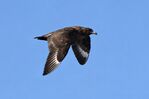
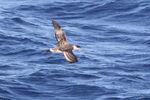
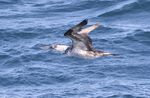
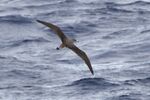
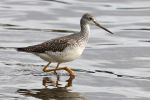
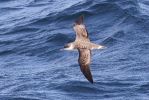
Just back from a two week cruise to the Canaries and Madeira, from Southampton, which also called at Cadiz and Lisbon. The dates were 4-16 October.
The best areas for sea watching were off the north west tip of France, west of Brest, approaching the edge of the Continental Shelf and, similarly, off the north west tip of Spain, west of Vigo/A Coruña. On the outward leg, the infamous Bay of Biscay was marginally rougher than a mill pond and the whole voyage continued in this vein until the return leg through the Bay, when there was a lovely swell on the 15th and a cracking Force 6/7 on the 16th.
Birding on land is somewhat limited, with less than a full day in each port but we made the most of a few coastal walks and visits to parks and botanical gardens whenever possible. I dipped on a Pied Crow which, for a few days had been present at Castillo de la Luz (a small park) on Gran Canaria and which would have been nice to get on my trip/Spanish list. A rewarding half hours birding was had in port at La Palma (one of the smaller Canary Isles) simply by scanning the nearby cliffs and higher mountains beyond from our cabin balcony. A pair of Peregrine (ssp pelegrinoides) put on a great show on the cliffs and flocks of Raven and Red-billed Chough were noted higher up.
Trip List :-
Rock Pigeon (Feral) (212) Woodpigeon (1) Plain Swift (23) Moorhen (5) Grey Plover (1) Ringed Plover (15) Kentish Plover (7) Whimbrel (3) Common Sandpiper (1) Turnstone (11) Sanderling (17) Arctic Skua (1) Pomerine Skua (1) Great Skua (3) Guillemot (3) Black-headed Gull (15) Mediterranean Gull (6) Yellow-legged Gull (262) Great Black-backed Gull (1) Lesser Black-backed Gull (110) Common Tern (4) Sandwich Tern (16) Corys Shearwater (532) Great Shearwater (525) Sooty Shearwater (1) Manx Shearwater (15) Gannet (132) Cormorant (1) Little Egret (3) Grey Heron (2) Buzzard (2) Kestrel (4) Peregrine (5) Rose-ringed Parakeet (22) Monk Parakeet (12) Red-billed Chough (43) Raven (5) African Blue Tit (1) Great Tit (1) Canary Islands Chiffchaff (14) Common Chiffchaff (3) Blackcap (4) Blackbird (13) Black Redstart (1) House Sparrow (9) Spanish Sparrow (1) Grey Wagtail (4) Yellow Wagtail (1) White Wagtail (2) Chaffinch (1) Madeira Chaffinch (2) Island Canary (13)
Stowaways on board, on the outward leg, were Blackcap, Chiffchaff, Yellow Wagtail, Blackburd and Woodpigeon.
Figures above a bit OTT but Ive just copied them from my eBird trip report!
Just back from a three week cruise, sailing from Southampton to Quebec City and back. We also called at St Johns in Newfoundland, Gaspé in Quebec, Havre St Pierre in Quebec, La Baie down the Saguenay Fjord in Quebec, Charlottetown on Prince Edward Island, Halifax in Nova Scotia and finally Sydney in Nova Scotia.
The weather crossing the North Atlantic was changeable to say the least. On the outward journey, once past the continental shelf, it clouded over, the seas got rough and it rained with winds, at times, at Force 10. The decks were closed for most of the time and little birding was done. Coming home, it was just the opposite with, generally, calm weather, calm seas, light winds and temperatures as high as 17*c. However, it changed on our last day at sea (18 October) when it was cloudy with a lot of rain. This was approaching Scilly, one of the best sea watching spots of the whole trip.
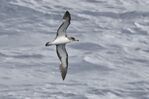
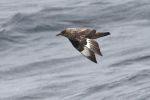
The Scilly area, on the way out, was very good with Manx Shearwater, Corys Shearwater and up to 65 Great Shearwater. A few Kittiwake, the usual plentiful Gannet and a Great Skua. I was interested to see what birds would be seen, way out in mid ocean. Not many, to be honest other than a few Gannet and say c.40 Fulmar. Good to see them going about their business, though, seemingly carefree hundreds and hundreds of miles away from land. As we headed towards Canada, but still several hundred miles east of Newfoundland, an adult Pomarine Skua was sighted. Shortly after, and on the same line, heading in the same direction, another skua, probably another Pomarine. Another 3 Bonxies would be seen, making a total of 4 plus another additional Pomarine on the return crossing.
The main sea watching areas en route to Quebec City were the Gulf of St Lawrence, the St Lawrence River itself and those areas off Newfoundland and Nova Scotia. Aucks started to be seen much closer to land and in the outer harbour type areas. Puffin, Guillemot, Black Guillemot and Razorbill were noted but not in any great numbers. Sea duck were seen just offshore and in bays and inlets.
On land, it was the usual walks in parks and gardens and seeing what you could on any trips out. The problem with cruising is that it is difficult to target any proper birdwatching sites because you rarely get a full day off the ship. More so, when its not a specific birding trip and your wife isnt a birder.
Out At Sea :-
Kittiwake American Herring Gull Fulmar Great Shearwater Manx Shearwater Corys Shearwater Sooty Shearwater Gannet Common Tern Great Skua Pomarine Skua Merlin Peregrine
Bays, Inlets, Shoreside Pools, Outer Harbours :-
Snow Goose American Wigeon American Black Duck Green-winged Teal Lesser Scaup Common Eider Surf Scoter White-winged Scoter Black Scoter Bufflehead Common Goldeneye Common Merganser Red-breasted Merganser Semipalmated Plover Lesser Yellowlegs Greater Yellowlegs Atlantic Puffin Black Guillemot Razorbill Guillemot Bonapartes Gull Ring-billed Gull Common Loon Double-crested Cormorant Great Blue Heron
On Land :-
Turkey Vulture Downy Woodpecker Hairy Woodpecker Canada Jay Blue Jay American Crow Black-capped Chickadee Boreal Chickadee Golden-crowned Kinglet American Robin American Goldfinch Dark-eyed Junco White-throated Sparrow Song Sparrow Common Grackle Northern Cardinal
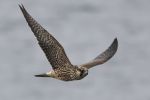
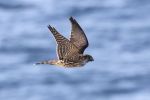
A real bonus was the unexpected birds flying by the ship in the middle of nowhere. Firstly, a juvenile Merlin, Taiga subspecies, flew alongside for 20 minutes or so, well out to sea, south of Newfoundland. A few days later, a juvenile Peregrine, Tundra subspecies did the same for well over an hour. This bird will have fledged this year to the north and more than likely would have been migrating, possibly to the eastern seaboard in the United States. Finally, we had 2 stow always on the return leg, a male and female Dark-eyed Junco, spotted a good one thousand miles into the journey. Not sure if they made it all the way to Southampton.
Not too many species seen but plenty of quality. Sea watching is my favourite type of birding and I thoroughly enjoyed the experience.
-- Edited by Mark Jarrett on Tuesday 21st of October 2025 09:15:05 PM
-- Edited by Mark Jarrett on Wednesday 22nd of October 2025 09:23:42 AM